Sunday, 22 March 2020

Current Trials

I expect we are all heartily sick of the bad news, but it does affect everything including our lifestyle. We cannot enjoy social nudity if being sociable puts everyone at risk.

Some of us can use our gardens if the weather is warm enough, at the moment it isn't so we are not missing much from the sunshine outdoors point of view.
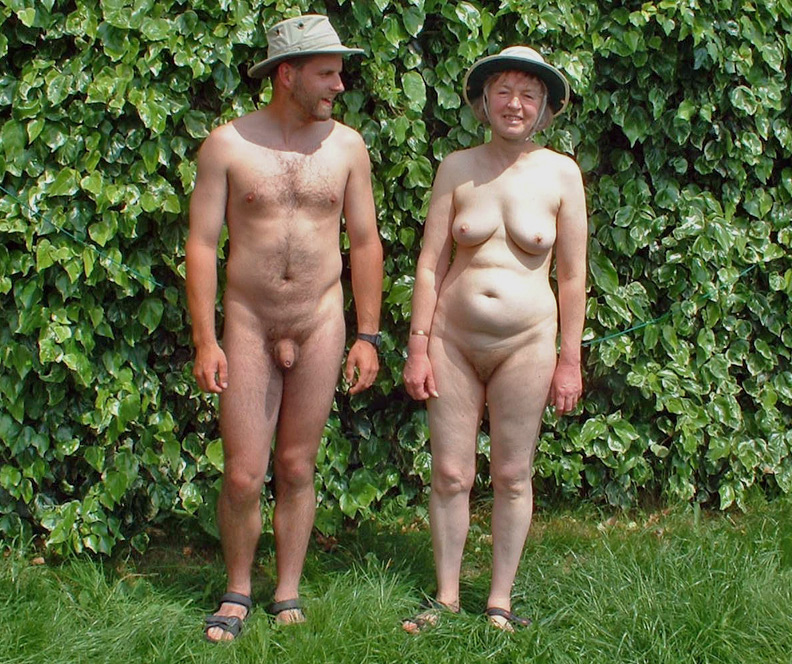
I dont know about naturist clubs but most swimming pools are closed. I hope Naturist clubs are following the government recommendations and closing.

Nude Rambling is a possibility as long as you dont do it in a group, only go with your own family keep it down to small numbers. Keep away from other ramblers and if you need fuel to get to the ramble, wear gloves at the pump and the checkout.


Be safe everyone and take this problem seriously. Keep 2 metres between you and anyone else and remember anything you handle outside the home could have been handled by someone carrying the Virus so wear gloves outside and wash your hands regularly. Do not rely on cheap face masks, the spaces between the weave is bigger than the virus so it can get through.


COVID-19: coronavirus facts and fiction


Mar 20 · 9 min read
Many people use the internet and social media to obtain their information about COVID-19, often just called coronavirus. Some of it is correct, much of it is not. As an epidemiologist with over 40 years of experience including seven years working for the World Health Organization, I will try and sort out what we currently know. However, this is a changing feast with new publications every day on all aspects of COVID-19.

COVID-19

Viruses are parasitic in that unlike bacteria, they can only reproduce inside a host cell, whereas bacteria can reproduce anywhere. However, virus particles can survive on surfaces. Viruses can infect all species of animals, and can even infect bacteria. All viruses consist of a core of either RNA or DNA, surround by a fatty coat. RNA viruses cause diseases like influenza, ebola, hepatitis, measles, and HIV. They mutate more easily than DNA-based viruses.
Viruses are nearly always much smaller than bacteria. For example, the bacteria that causes smallpox are about 300 nanometers in diameter, compared to 120 nanometers for coronavirus. To put that in perspective, that makes a coronavirus particle about one 2,000th the size of a grain of salt.

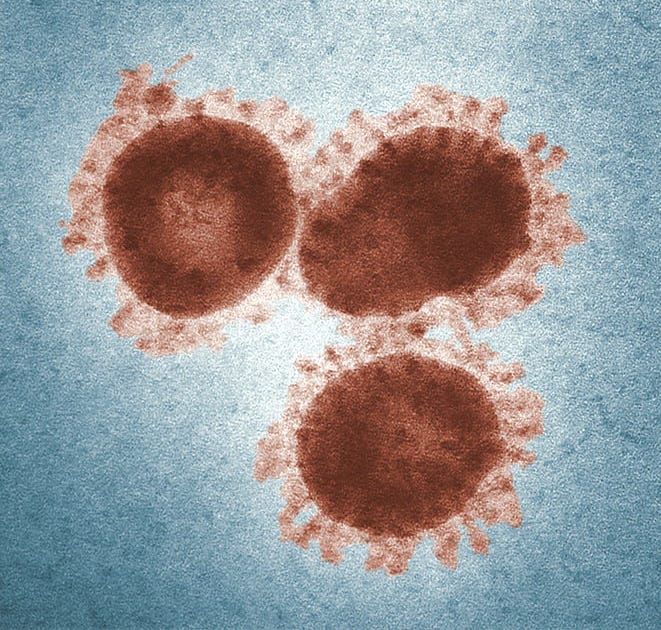

Electron-microscopic image of the COVID-19 virus

COVID-19 has spikes coming out of it so that it looks like a crown — hence its name. It is these spikes that attach to receptor sites in the lining of your throat, nose and eyes.

Risk factors for COVID-19


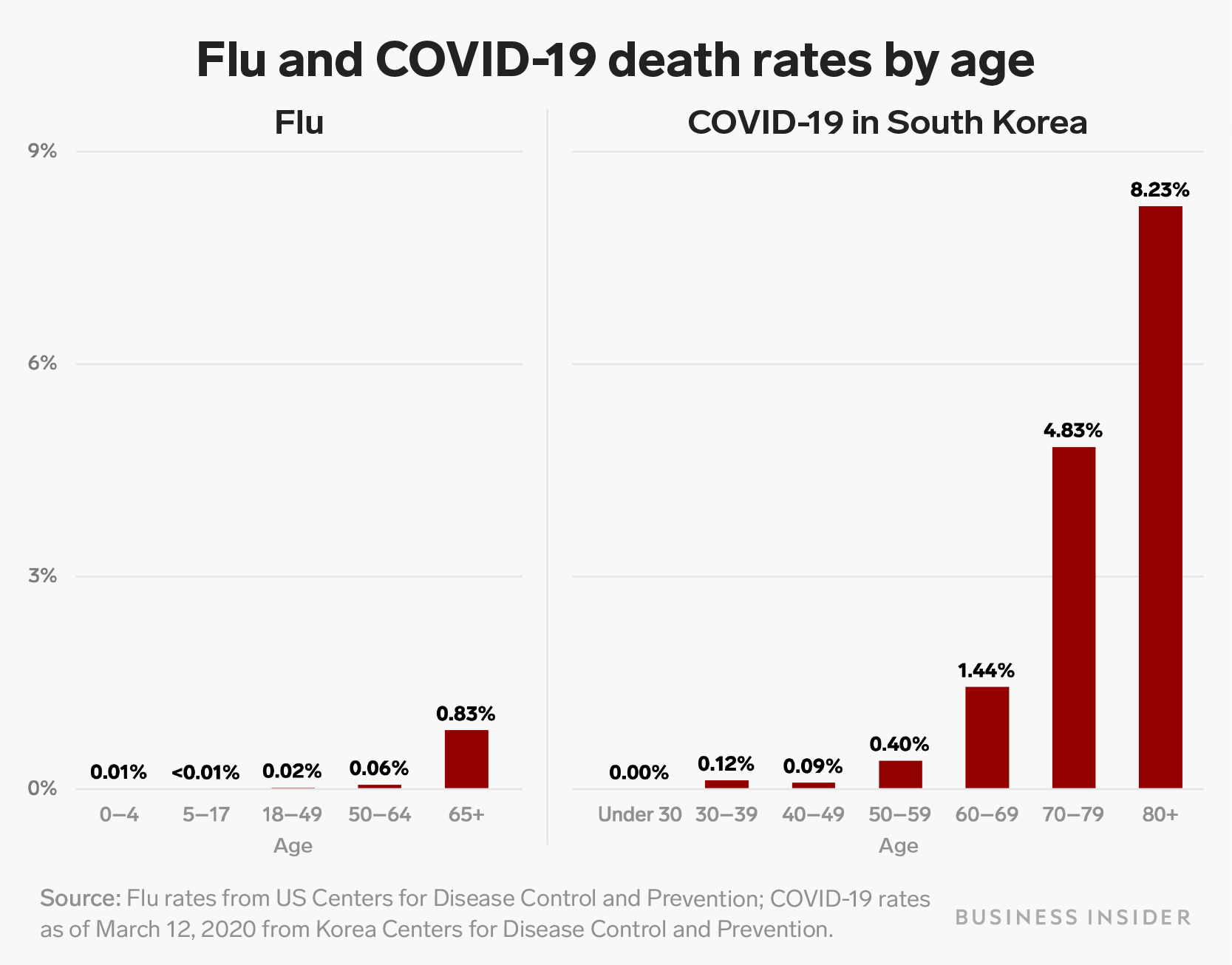
Chart showing death rates by age group for for Flu and Covid-19
Source: https://www.businessinsider.com.au/coronavirus-death-rate-south-korea-compared-to-flu-2020-3

In the vast majority of people, a COVD-19 infection results in similar symptoms to the common cold or an influenza. However, some people have a much more severe disease that can end up with multiple organ failure and death.
Age is the dominant risk factor for poor outcome as you can see in the above chart, especially in those over 80. Our immune system deteriorates with age, and older people are less able to fight off the infection with their own immune response. On top of that, most elderly people have other chronic conditions that can also increase the severity of the infection. However, although much rarer, younger people (including children) can get very severe infections even without any other underlying condition.
Chronic conditions such as diabetes, hypertension, COPD, asthma and cancer appear to be risk factors. In fact any condition that impacts on your lungs or impairs your immune system puts you at higher risk. However, we are still unclear exactly which specific conditions imply greater risk, and are awaiting more data from China and elsewhere. There is also some controversy over whether some of these do in fact increase risk. If you are on a medication that may impact on your immune system, such as corticosteroids for asthma and rheumatoid arthritis, chemotherapy for cancer, or medication for hypertension, the best advice is to speak to your medical consultant or GP before considering coming off them during the epidemic.
There have been reports published from Chinese researchers that those with blood group A are both at higher risk of infection and of a more severe disease. However, I would like to see this repeated in other studies before I accept it as being correct.
At this time, there is no evidence that pets can spread COVID-19 or that they might be a source of infection.
There is also no evidence that temperature or climate impacts on risk.

Prevention measures


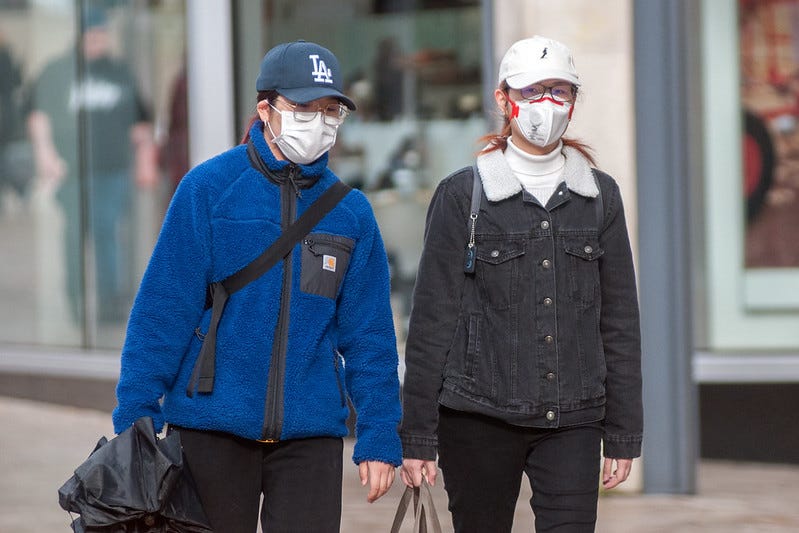
Picture of people wearing face masks
Face masks have limited value for those who are not infected

Because the virus particles are so small, they will pass straight through a standard surgical face mask. There is therefore no benefit to be gained from wearing one if you are well. However, if you are sick, then the majority of the particles that you expel when you sneeze or cough are in fact fairly large virus-containing water particles that won’t go through the mask, and therefore wearing one when you are infected will make it less likely you will infect others. It is therefore recommended that infected people, and those who look after them, wear surgical masks.
Doctors and nurses looking after sick patients wear special masks called N25. They are much finer than surgical masks, and can block out even the very small virus particles. But they must be properly fitted to your face and are uncomfortable to wear for long periods of time.
Social distancing is something we should all be doing until the epidemic is over. By that I mean try to avoid coming into close contact with other people, unless it is essential. If you can work from home, you should be doing this now.
The best way to avoid infection is by constantly washing your hands with soap, detergent or a strong alcohol based sanitiser which is at least 60% alcohol. These break down the fatty outer coat of the virus, causing it to die. There are plenty of videos on how to wash your hands properly, such as this one:


Video: How to wash your hands properly

Also, regularly clean down and disinfect surfaces that are frequently used like television remote controllers, door handles and counter tops and toilets. This is especially important if you have someone who is sick in the house. First clean with soap and water, then disinfect with hospital grade disinfectant. Make sure that you wear gloves when you do this.
There has been a lot of discussion about whether or not you should pull children out of school. This is a difficult one. Countries like Singapore have kept schools open, and are managing quite well. The current thoughts are that children do not appear to be a major factor in the transmission chain, and the disruption to their schooling might seriously affect them. Each parent will have to make up their own mind about this. I would stick to Government advice.
There are many research groups around the world developing vaccines against COVID-19. Early human trials have already begun in the USA, and an Australian group believe that they can get their vaccine into major production by the end of the year — so hang in there!

Symptoms of coronavirus


The symptoms of COVID-19 are similar to what you might expect from the common cold or influenza. However, with COVID-19, nearly everyone gets a fever and dry cough. If you have these symptoms and suddenly feel quite unwell and short of breath, then you should go straight to the nearest Emergency Department. Otherwise, self-isolate yourself for 14 days.

Treatments


Apart from treating the symptoms, there are currently no drugs that can treat COVID-19. Having said that, there are now trials underway of several drugs used to treat HIV and Ebola virus that are showing initial promise. Chloroquine sulphate used to prevent and treat malaria is also showing some promise. The bad news is that these drugs have to go through formal safety and efficacy studies before they can be used on COVID-19. However, because these drugs are already used in humans, this will be much quicker than developing a new drug, and we are likely to see the results before the end of the year.

Likely course of the epidemic


How long the epidemic lasts is based on three important numbers used by epidemiologists . The first of these is called R0 (pronounced Rzero). R0 is the average number of people each infected person infects. Based on data from China and a cruise ship, we are pretty sure that R0 is about 2.5, that is each infected person on average infects 2.5 other people. While R0 is greater than 1, the epidemic will keep increasing. If we can get R0 down to 1, it will become endemic, that is it will be permanently in the population grumbling along at a low level. However, if we can get R0 below 1, the epidemic will die out.
Naturally therefore, all public health measures are designed to try and reduce R0 to below 1. How do we do this? Well first and foremost, we vaccinate the population against COVID-19 — however, this will not be available for a few months.
Secondly, those who contract COVID-19 will become immune and therefore cannot contract the disease again (there has been much discussion about how much immunity you get after contracting the disease), but it looks as those most recovered people will have immunity.
Finally, we can adopt measures such as contact tracing of those affected, quarantining, social distancing, closures of schools, universities and public gatherings. All of these will help reduce R0. By undertaking these measures, we will probably not affect the overall number of people infected, but we will spread out the infections over a longer period of time, allowing our health services to cope better. This approach has been widely discussed on social media as “flattening the curve”.
The next important number is how long we think someone is infectious for. Again, based on the Chinese and cruise ship data, we think it is about 5 days.

Herd immunity

The final crucial number is herd immunity. If enough people in the population have recovered and are immune, or are vaccinated, R0 is driven below 1. Herd immunity is the percentage of the population immune to the disease needed for the epidemic to die out. The formula for herd immunity is actually quite simple:
Herd immunity = 1- (1 / R0). So if R0=2.5, herd immunity= 1–0.4 = 0.6.
In other words, when R0 is 2.5, we need 60% of the population to be immune for the epidemic to die out. If we could drive R0 down to 1.5, herd immunity would be achieved with only 30% of the population having recovered from the illness and thus being immune.
We can use these parameters to do some very simple modelling.
Let’s start off with 100 people infected on Day 1, and R0=2 (because many of us are practising social distancing).
By Day 5 we will have 300 people infected, by Day 10 it will be 900, and by Day 30 it will be 72,900 — so you see how quickly the epidemic can spread, and why R0 is so important.
At the same time, when enough of the population have recovered and become immune, the epidemic will die out.
Therefore, you can see that the next 3–4 months are critical in terms of the demand on our health services, and that by August/September we should start seeing the epidemic subsiding due to herd immunity.

Where to get credible information


The are thousands of articles, blogs, news reports and tweets out there about COVID-19. Apart from that, there is an exponential growth in the number of papers published in medical journals about COVID-19. I suggest that you ignore much of what you see in social media — it might or might not be true. I suggest the following websites as credible sources of information. 

In conclusion

With such a rapidly changing scenario, it is clear that there is much we still don’t know about Covid-19, and how long it will take for clinical trials of drug treatments and vaccination to be completed. In the meanwhile, I will update this blog on a daily basis to bring you any strong evidence about risk factors and treatment.

WRITTEN BY


An epidemiologist and biostatistician with over 40 years of experience. Foundation Chair of Biostatistics at the University of South of South Australia.


Wednesday, 4 March 2020

What's it all about

The weather is not being helpful, but I suppose it is still not spring yet and we have had no snow to dive into during a sauna session.

What is it about social nudity that makes it so enjoyable. We say you cannot describe a Rose to a blind man, but can we even describe it to ourselves. Do we know why we enjoy it, or dont we know but enjoy it anyway.

I suppose there is an element of exhibitionism, but what is exhibitionism?
Is it just going nude in public or does it have a sexual element?

I always think I have exhibitionist tendencies and Maja less so, but there is no sexual element. A touch sensual maybe, but sex is a private thing. Not something for everyone to see. So may be we aren't exhibitionists.

exhibitionism | ËŒeksəˈbiSHəˌnizÉ™m | noun extravagant behaviour that is intended to attract attention to oneself. Psychiatry a mental condition characterised by the compulsion to display one's genitals in public.
Looking at the dictionary, we could be confused, because while we love being naked in public, we do not have a compulsion to display our genitals. We just enjoy being naked.


We would like to be naked more often and in places where it would be frowned upon today. We are hoping to do a World Naked Bike Ride this year, so we will be naked in a town centre, but as with naturism we will just be naked, we won't be thrusting our genitals in front of people.


In Germany on Holnis beach some years ago, when Maja found the approach to the toilets only had a chain link fence between her and a public road and carpark, we laughed about it, we weren't turned on by it and Maja didn't hang around posing so more of the public would see her. She just reacted normally. 

Where will naturism be in the future, will we be still trying to work out what we are. Will we be totally banned, or will we be out of the closet and proud of our lifestyle.
Perhaps we'll be holding "Nude Pride" marches, if Gays can protest and get the law changed, why cant we. They allow Nude Bike Rides so why not nude marches.

Tuesday, 4 February 2020

Nudity in Art

I have recently started to wonder at the Carbon footprint of the clothing industry. Perhaps we should not be making clothes - something to ponder about.😀😀


Sunday night on BBC4 there were a couple of items of interest, the first posed the question what is wrong with nudity?

They didn't really arrive at a conclusion, but some of the tests were interesting. There was one were the subjects were fitted with goggles to monitor where they were looking, then nudes were put in front of them and not one of them stared at the genitalia, most looked at the whole body and one stared determinedly at the eyes of the nudes. He obviously had hang ups about nudity, but the rest behave as most nudists do. I think for a control group they should have performed the tests on a group of nudists as well.


The second program was about the fig leaf in art.

They demonstrated that, far from covering the area the fig leaf attracted attention to it. But the history was interesting, they asked where and when the prudery came from. It seems that apart from historic manoeuvrings, the restrictions that affect us today came from the church in the middle ages. I suppose for someone who is denied the sight of naked members of the opposite sex, the sight of a nude painting or statue must be highly sexual or erotic and if they aren't allowed the pleasures which their God designed them for, no-one else should enjoy them.

Then Monday night Mary Beard pontificating about nude art.

Lecturing on the eroticism and sexualisation of statues from as far back as ancient Greece and paintings from nearly as long ago. I was looking at them as she held forth on her subject and for the life of me I could not see the eroticism and sexualisation she was talking about. Nudes, both male and female were just that, male and female nudes. Is Michelangelo's 'David' either erotic or sexual and what about Botticelli's 'Birth of Venus' or (appropriate for this blog) Goya's 'Naked Maja'.


It was obvious the she could not separate nudity from sex, so any nude statue or painting was sexualising the model. I cant help thinking these airy-fairy art critics should get a proper job. 


Monday, 30 December 2019

It's a Crime


I was sitting back in my arm chair looking at the picture (above), which I have as a 60 x 40cm print on canvas, hanging on the wall over the TV. When it occurred to me, what a crime clothing is. Being forced to cover such natural beauty is all wrong.

Why hide it under some man-made monstrosity?

Happy New Year all.

Thursday, 19 December 2019

Winter Blues

A bit sparing this time, I'm laid up with a chest infection so haven't been very busy.

When is the rain going to stop? There cant be much more water left up there.

You can understand why the Scandinavians are big on Sauna's. Somewhere hot to hide away, then a swim in the fjord or snow angels to cool off before rushing back in to warm up again. We dont get so much here because we were basically a Serfdom until quite recently (some would say we still are). The Lords and Barons might have had something but most of us were expendable.

In the distant past, some villages had what you might call a communal bath. The Blacksmith would roll a barrel out to the village square, fill it with water and light a fire under it. 

When it was hot enough, the mayor or the local lord and his lady would remove their clothes and climb in. When they had finished, their children went in, then the next family down the hierarchical ladder. Until finally the village idiot, thats one of the reasons he always smelt.  Nudity wasn't an issue then.


These days some of us try to improve things with a hot tub, the one above is massive, must hold 20 people and have room for a couple of reindeer. The trouble is there is no hot room nearby for when you get out.


We used to have a mixed nude sauna at the Loughborough leisure centre and like the barrel nobody worried about who was joining us in the facilities, not all were naturists, but they enjoyed it none the less. Although I get the idea that some of the staff weren't happy about it, even if they didn't have to go in while we were there. For no real reason, the whole thing was changed and as far as I can find out there is no mixed nude sauna any more


This weather is a good excuse to play with indoor photography and it can be a lot of fun, but I wont elaborate.

Also on the not so good photos, you can practise with Photoshop or other editing software.

 This one was good in monochrome, but I decided
 to add colour and remove the background


And there is no need to explain this some is good so more must be better.

Saturday, 9 November 2019

Them and Us.


Why is it that humans are ashamed of their own bodies?
Why are so many of us frightened that our naked bodies or those of our wives or family might be seen by someone else?

We are all the same in a general way, for the most part we all have heads, bodies, arms and legs. We all eat, drink and go to the toilet. We all must sleep at sometime.

Our internal organs are pretty much the same, gender differences aside and we all came into this world from the womb.

What is there left, we all have skin. It might come in different colours and some might be smoother than others, but it is all made the same.


Thanks to Nick and Sue for these two photos of the beautiful Sue
We all have nipples, the surrounding areola might vary in size and on average women's are larger than men's, but some women have small ones as well. The same applies to breasts the range of women's breasts is far greater than men's, starting at the almost non existent and reaching a size that causes back problems for those who have to support them.

Men have a range too, again it starts at nothing and reaches the size that some women would be proud to have. Men's breasts seem to have had some long forgotten use and other than one thing, which I will cover later, are pretty much cosmetic.


Women's breasts are there to produce milk for our off-spring, that is the main reason for their existence and a good reason it is, mothers milk makes babies grow and be more resistant to infection. Like men's breasts there is another use, but again I will come to that later.

So far we are physiologically all the same, with some minor differences and two major ones. The skin around your breasts is the same skin that covers your arm, there is nothing special about it. Both gender's nipples and breasts are similar.


So why are men able to be topless in the street or on the beach and nobody complains, whereas women going topless in public have others, usually hysterical women running to the nearest policeman to complain "think about the children" seeming to have forgotten the primary role of the breast.

Before the feminists start calling me a sexist pig etc. I should explain that there are far more complaints about topless women from other women, than from men. Few men will complain, unless they are forced by an irate wife or are very uptight.

The usual complaint is "I don't want my child seeing them, it could scar them for life!" So I guess we must assume those complaining did not do the best they could for their children by breast feeding them.

Lower down the human body we come to, what is known as the belly button (navel). Actually the place where we were attached to our mothers when we were in the womb. You might have an 'innie' or an 'outie' but other than that they are the same for every one.

Further down we come to the Pubic Hair, most of us grow it. Some shave it off and others think it is a beautiful display of adulthood, particularly on women. But again we all have it, or had it. So no difference there.


Now we have reached the major difference, the difference to end all differences, vive la difference. Just below the pubic bone the approach to a woman's difference begins with a fold in the skin, but note at this point it is still just skin, same as covers your arm, breasts etc.


At the same point on a man is the start of the root of his Penis, it might be big or small erect or flaccid, but there it stands and of course this is where the difference and in some opinions the problems lie.


To those who don't understand, because they have never had one, the male penis is usually quite well behaved. But there are times when it appears to have a mind of its own. Sometimes, particularly in younger men it can become unexpectedly erect and even surprise its owner. Sometimes with no stimuli it can suddenly rise, even when a man is alone with nothing to trigger it off. Women are lucky in that respect, when they suddenly and inexplicably become aroused, it doesn't always show.

If we continue down the female body we will come to the clitoral hood, beneath this hood is the erogenous zone par excellence, the Clitoris (or as sometimes called, the love bean) and it is outside the woman's body. Below this is the entrance through her labial lips to her vagina, the moist cave that men dream about.

Below the man's Penis is his scrotum containing his testicles and inside them his sperm, the whitish liquid he hopes to deposit inside the woman, when she is receptive. If that sounds base, it's because it is. Like all the other animals our main reason for existence is procreation.

Carry on round and there is the anus, it is pretty much the same for both sexes. So doesn't come into the differences, but it is where we eject waste food from and some people use it for other things.

Having touched on erogenous zones (ooh! pun intended ). I should now say that both male and female nipples can give sexual pleasure if teased in the right way. Some men don't like it and unfortunately some women feel the same way, but for most it is a powerful erogenous zone.
The area of skin between the scrotum and the anus on a man and between the vagina and the anus on a woman is called the Perineum and is a powerful erogenous zone if treated carefully and stoked lightly.

A final point on the location of erogenous zones, they can be almost anywhere and in this people differ. While the nape of the neck might be effective for some women, it rarely works on most men and some women. Stroking a woman's naked back or fluttering your hand over her stomach might put her on cloud nine, but on other women it'll either not work or have the opposite effect. You have to find your partners zones by trial and error.

Okay that is a quick tour, now back to the questions. There is so little difference in the make up of our bodies, why are we afraid of them?


A woman's genitals are pretty well hidden. If she were to walk naked along a public road, her genitals would be all but hidden. It would take a definite effort on her part to make them clearly visible and if she is unshaven there, it would be harder to get even a glimpse. Her breasts would be visible, but no more than a man's and apart from the milk delivery, ostensibly no different. Although they do offer an attraction to men.


With a man it becomes more difficult, his genitals are on show all the time, there is no way to hide them if he is naked. The question is, how much of a problem is that?
He might get an erection, showing he is aroused. The naked woman could be equally aroused but it is barely noticeable.

If you were to explore naturism, you would soon see that very few men have erections and if someone gets one it is ignored. Most male naturists occasionally get an unwanted erection, naturists are not sexless, they enjoy active sex lives when the environment permits. In fact they probably have better control of their bodies, there is nowhere to hide when you are naked. It should also be said that most male textiles also get unwanted erections occasionally.


Penis' of course come in different sizes, from the small to the enormous with the average size being around six and a half inches. To compare them with another visual characteristic there is probably as much variety in size as there is in the size of a woman's breasts.

I can imagine that there are still some women who might be frightened at the sight of a large penis, even if it is flaccid. If the penis was being deliberately flaunted in a way to cause distress, she has a right to be concerned and to complain to the police about it. But it is similar to someone using threatening behaviour, waving their fists around with intent to cause injury. They can be arrested as well, but you wouldn't want a law compelling everyone to keep their hand covered in public, that would be silly. Instead the law should deal with the individual miscreant.

In short social nudity should be commonplace, everyone should be allowed to be naked whenever they want to be, erections should be ignored as should erect nipples, but nobody should be forced to be naked. It should be every individuals choice. Conversely no-one should be forced to be clothed. A clothes optional society, would be a much better adjusted society.


Thanks again to Nick and Sue from "in the buff" naturist website. If anyone else would like to contribute please contact me, either through "In the Buff" or by leaving a comment on this blog. Or by email.

Monday, 4 November 2019

Scanner


I hope you'll bear with me, I have just got a new scanner and I'm hoping to scan in some more pictures for this blog. All I have to do is figure out how it works.


I'm also writing a book about a young naturist woman and her friends, who start a naturist club. local problems with a vindictive gossip and eventual acceptance. The working title is "The Club" but that may change.